
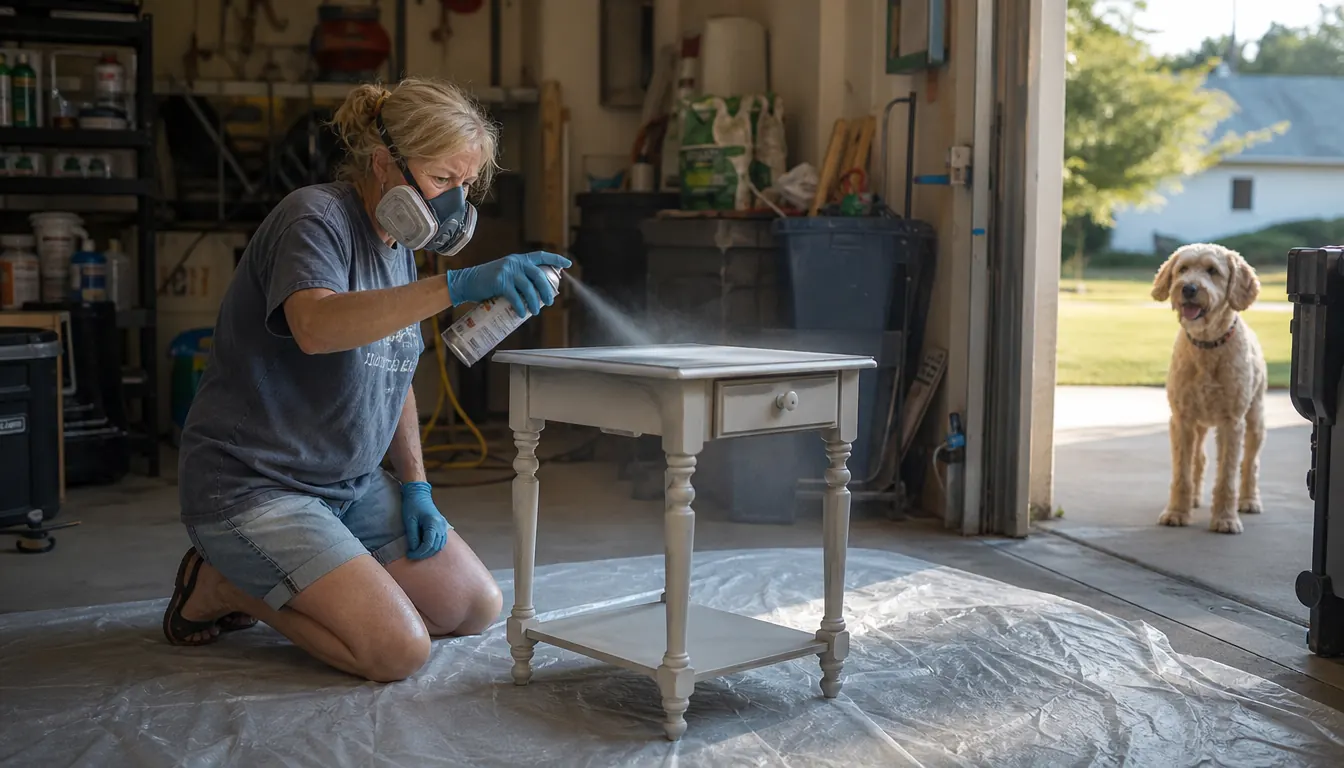
If you have been standing in the paint aisle trying to decide whether to try Rust-Oleum Chalked Spray Paint, I understand. I stood there myself last spring, reading the can and wondering if it would really give me that smooth, velvety finish without brush marks. I have now used it on four projects, from a thrift store nightstand to a shelf Ron built for my craft room. I have strong opinions, and most of them are good. A few of them are the things nobody tells you before you buy.
I am Marlene. I craft at a folding table in the spare bedroom I call the craft room, and I have been making things for about 25 years. My dog Biscuit sleeps under the table and steals ribbon if I drop it, so I keep my supplies up high. Big messy jobs like spray painting go out to the attached garage, which is exactly where you should use this paint. Here is my honest review, good and bad.
The Quick Verdict
A smooth matte finish with fast dry time and low odor, as long as you do the prep and keep it away from water.
Amazon Check Today's Price →What I Liked
- Smooth matte finish with no brush marks, even for a first-time spray painter
- Dries to the touch in about 30 minutes, so a second coat fits in a lunch hour
- Low odor and low VOC, which makes it bearable in the garage with the door open
- One coat covers most clean, lightly sanded wood surfaces
- Cleanup is just soap and water
Where It Falls Short
- Not waterproof, so anything that gets wet needs a separate topcoat
- Overspray lands everywhere, so you need a drop cloth and good airflow
- The thin, honest finish shows scratches and dents you did not sand out
- The matte surface fingerprints and scuffs if it gets handled a lot
The chalked spray paint I keep reaching for
For small wood projects and decor pieces, Rust-Oleum Chalked gives a smooth matte finish with almost no brush marks and dries in about 30 minutes. See today's price on Amazon.
Amazon Check Today's Price on Amazon →How I've Used It
My first project was a nightstand I found at a thrift store. The wood was scratched and the drawer stuck, but the shape was good. I sanded it lightly, wiped it down with a damp cloth, and took it out to the garage. I shook the can for a full minute, tested the spray on a piece of cardboard, and then went to work. The paint went on evenly and dried to the touch in about 30 minutes, just like the can says. I gave it a second light coat because the first one looked a little thin in the corners, and by the next morning it looked like a different piece of furniture.
Since then I have used it on a bookshelf, a wooden tray, and a small shelf Ron built to hold my jars of brushes. The bookshelf took one coat and looked finished. The tray took two because I kept fussing with it. The shelf took one. Every time, the finish dried smooth and matte, with no brush strokes to worry about. Cleanup was easy too. Soap and water took the paint off my hands, and a little warm water cleaned the nozzle area of the can.
The low odor surprised me. I expected the usual spray paint smell that sends you out of the garage coughing. This one is noticeably gentler, and the can says low VOC. I still opened the garage door and wore an old mask, but I did not have to air out the house afterward. For someone who crafts indoors most of the year, that matters.
I also painted a small wooden sign for the church holiday bazaar last December. I stenciled the words, gave it a light sanding, and sprayed it with one coat. It dried smooth and matte, and it sold before the first hour was over. I do not say that to brag. I say it because the finish looked that good, and the person who bought it did not know it had started as a scrap of pine from Ron's workbench.
What Nobody Tells You Before You Buy
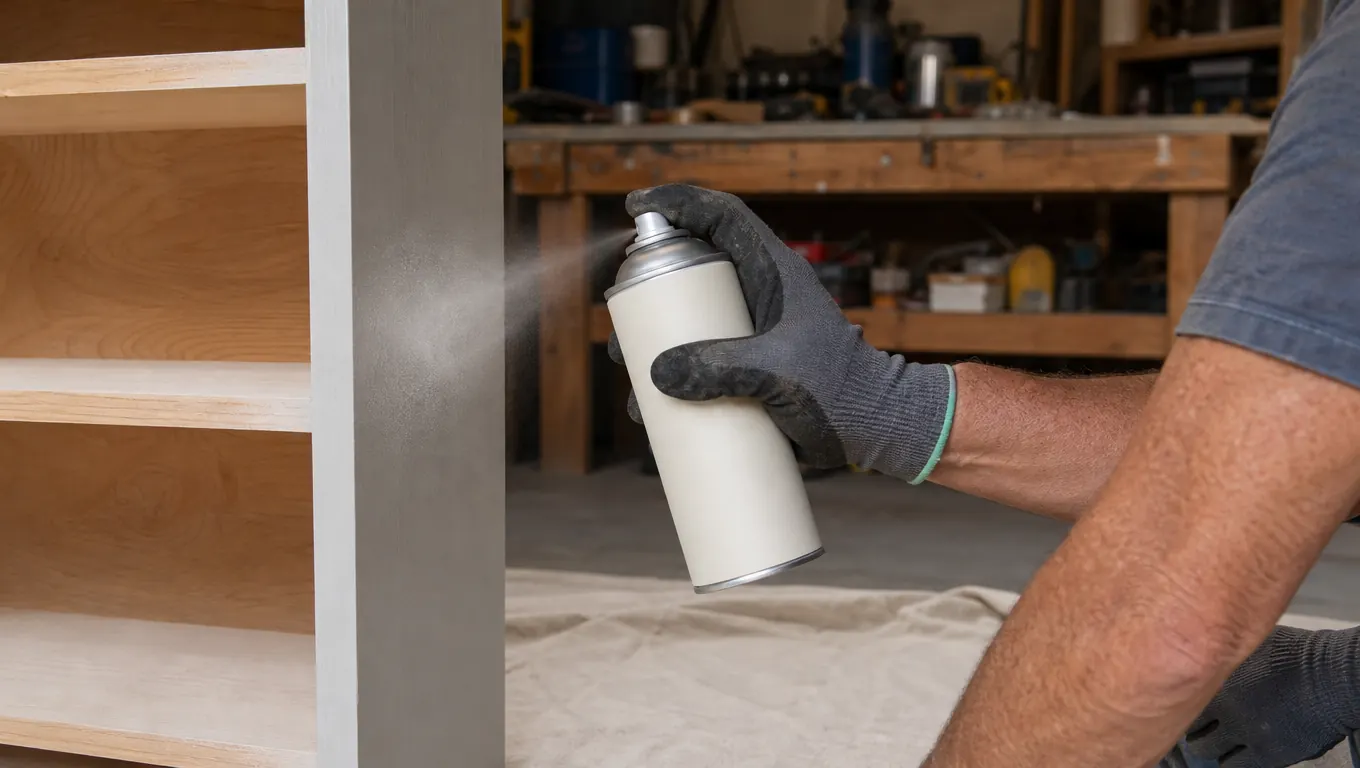
Here is the first thing nobody tells you: it is still spray paint. It comes out of a can under pressure, and that means overspray. I learned this when I painted the nightstand and found a fine dust of paint on the old drop cloth, on the garage floor, and on the legs of Ron's workbench. The can says it covers 150 square feet, and that number is probably true for a flat surface with no breeze. For a chair with spindles or a table with turned legs, you will use more than you think, because some of the paint goes into the air instead of onto the wood.
The second thing is that prep is not optional. The can says most surfaces need only one coat, and that is true, but only if the surface is clean and lightly sanded. I tried it once on a bookshelf I did not sand, just wiped with a damp cloth. The paint went on fine, but the old scratches showed right through the matte finish. Chalked paint is not thick like some brush-on paints. It is smooth and thin, so it will show every flaw you did not fix first. Sanding is the real work. The painting is the easy part.
The third thing is the one that surprised me most: this paint is not waterproof. The specifications say so plainly, but who reads the specifications before they buy a can of spray paint? I did not, and I painted a small wooden tray that I planned to use for the remote controls. Water rings appeared the first time I set a cold glass on it. I fixed it by adding a coat of clear furniture wax, and now it is fine. But if you want to paint a kitchen table, a bathroom shelf, or anything that will get wet, you need a topcoat. Plan for that from the start.
The fourth thing is the finish itself. The matte, velvety texture is lovely, but it is also soft. It shows fingerprints, and it will scuff if you drag something across it. This is not a problem for a nightstand or a decor piece that sits still. It is a problem for anything you handle a lot. A clear wax or a water-based polyurethane topcoat fixes most of it, but that is an extra step and an extra purchase. Nobody tells you that when they show you the pretty pictures.
One more thing: shake the can longer than you think you need to. The first time I used it, I shook it for maybe ten seconds, and the spray sputtered and came out uneven. Now I shake it for a full minute and test it on cardboard before I point it at anything I care about. That little habit has saved me more than once.
Where It Shines
For small furniture and decor pieces, this is the easiest way I have found to get a smooth, matte, no-brush-stroke finish. The can says it is perfect for updating nightstands, coffee tables, bookshelves, and cabinets, and I agree, with the word 'updating' doing a lot of work. These are pieces that already have good bones. You are changing the surface, not fixing the structure.
The 30-minute dry time is the feature I appreciate most. I can paint a piece in the morning, let it dry while I make tea, and give it a second coat before lunch. With brush-on chalk paint, I used to wait hours between coats and still end up with bristle marks. This paint dries fast and smooth, and because it is acrylic, cleanup is just soap and water.
I also like that Rust-Oleum Chalked is low odor and low VOC. That is not a small thing for a home crafter. I can paint in the garage with the door open and not worry that the smell will drift into the house and bother Ron. I still use a mask and give the piece time to cure, but the whole experience is more pleasant than any spray paint I used in my younger years.
Where It Falls Short
The biggest limitation is water. This paint is not waterproof, and no amount of wishing will change that. I keep a can for indoor furniture and decor, and I reach for something else for anything that will meet moisture. If you want one paint to do everything, this is not it.
The second limitation is control. A spray can is a wonderful tool for a flat panel and a frustrating tool for a delicate detail. When I painted a small picture frame, I ended up masking the glass with tape and paper, and I still got a little overspray on the back. A brush gives you more control for tiny projects. This paint is better for surfaces where you can sweep the can across the whole piece.
The third thing is the size. The can is 30 fluid ounces, which is 887 milliliters, and that is a lot of paint for one picture frame or one small tray. I have half a can left in the garage, and I am already thinking about what to paint next. If you only have one small project, a smaller can would be easier to store. But if you are like me and you will find another project, the big can is fine.
Spray paint is also picky about temperature. I tried to paint a small shelf on a humid day, and the finish looked a little dusty because the humidity got into the spray. On a dry, mild day, it came out perfectly. If you can wait for a nice day, your results will be better.
The can says one coat, and it means it, but only if you sanded and cleaned first. The prep is the real project.
Tips From My Garage
Tip one: buy a cheap plastic drop cloth, not a cloth one. I used an old canvas drop cloth for my first project, and the overspray soaked right in. The paint is permanent on fabric, so now I use a plastic tarp from the hardware store and throw it away when it gets too speckled. It is cheap and saves a lot of scrubbing.
Tip two: set the piece on a small turntable or a lazy Susan. I know it sounds silly, but being able to spin a chair or a lamp base while you spray means you can keep the can moving and get an even coat without walking around the piece. I found an old lazy Susan at a thrift store and it has become one of my favorite painting tools.
Tip three: paint in the morning, not the evening. The light is better, so you can see thin spots, and the temperature is usually more even. I have made too many mistakes in the dim light of the garage at night, only to see them the next morning.
Tip four: keep a can of clear furniture wax or a water-based polyurethane on the shelf next to your paint. You will need it for anything that gets touched or wiped. I learned that with the tray, and now I just plan for the extra coat from the start.
How the Finish Holds Up Over Time
I painted the nightstand in April, and it is now late fall. The finish has held up well on the nightstand, which mostly sits still. The bookshelf gets handled every day and still looks good. The tray needed the wax topcoat, and once I added it, it has been fine. So my honest answer is that it holds up as well as the surface it is on and the topcoat you give it.
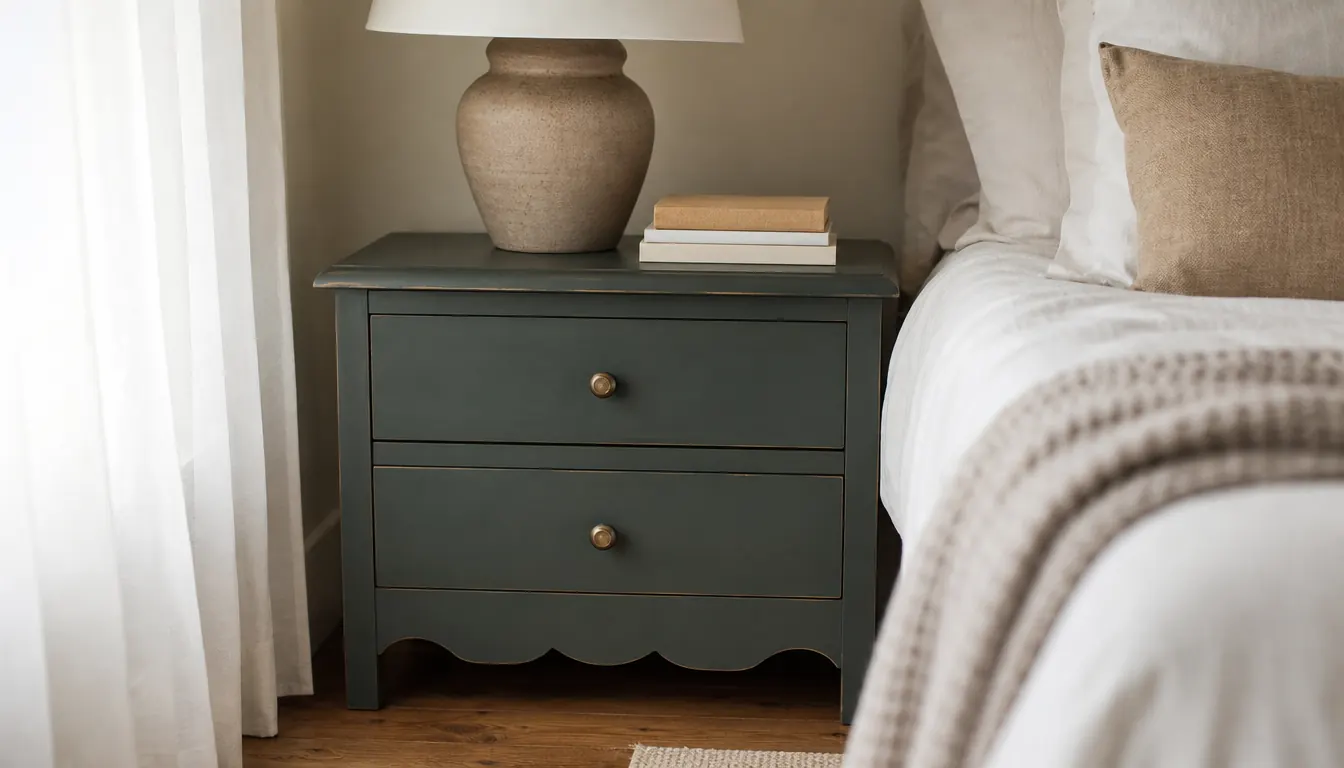
The nightstand has held up beautifully. It sits next to my side of the bed, holds a lamp and a stack of books, and gets dusted every week. The matte finish still looks smooth, with no chips and no yellowing. I cannot ask for much more from a thrift store find and a can of spray paint.
If you are painting something that will sit on a shelf and be admired, this finish will look good for a long time. If you are painting something that will get knocked around, put a protective topcoat on it or choose a different paint. That is the honest tradeoff.
Who This Is For
This paint is for the weekend DIYer who wants to change the look of a piece without stripping it down to bare wood. It is for the crafter who makes decor for her own home and wants a smooth finish without brush marks. It is for anyone with a garage, a porch, or a well-ventilated space, because even low-odor spray paint should be used with airflow. If that sounds like you, and you are willing to spend twenty minutes on prep, you will likely be very happy with it.
If you are the kind of person who enjoys the process, the sanding and the waiting and the first coat going on, you will like this paint. It rewards patience. If you are looking for a one-step product that fixes a rough piece of furniture without any work, this is not it. But if you are willing to put in a little effort, the result is worth it.
Who Should Skip It
Skip it if you are painting something that will get wet, like a kitchen table or a bathroom cabinet, unless you are ready to add a topcoat. Skip it if you have no place to spray paint, because the overspray will find its way onto everything nearby. And skip it if you want a thick, forgiving paint that hides flaws, because this finish is smooth and honest. It will show what is underneath.
I will also say this: if you are sensitive to spray paint even when it is low odor, this may not be for you. The low odor and low VOC formula is much gentler than standard spray paint, but it is still an aerosol. I wear a mask and keep the garage door open, and I would not use it in a closed room. Respect the product and it will treat you well.
Ready to try it on your next project?
Rust-Oleum Chalked is the spray paint I reach for when I want a smooth matte finish without brush marks. Check today's price on Amazon.
Amazon Check Today's Price on Amazon →