
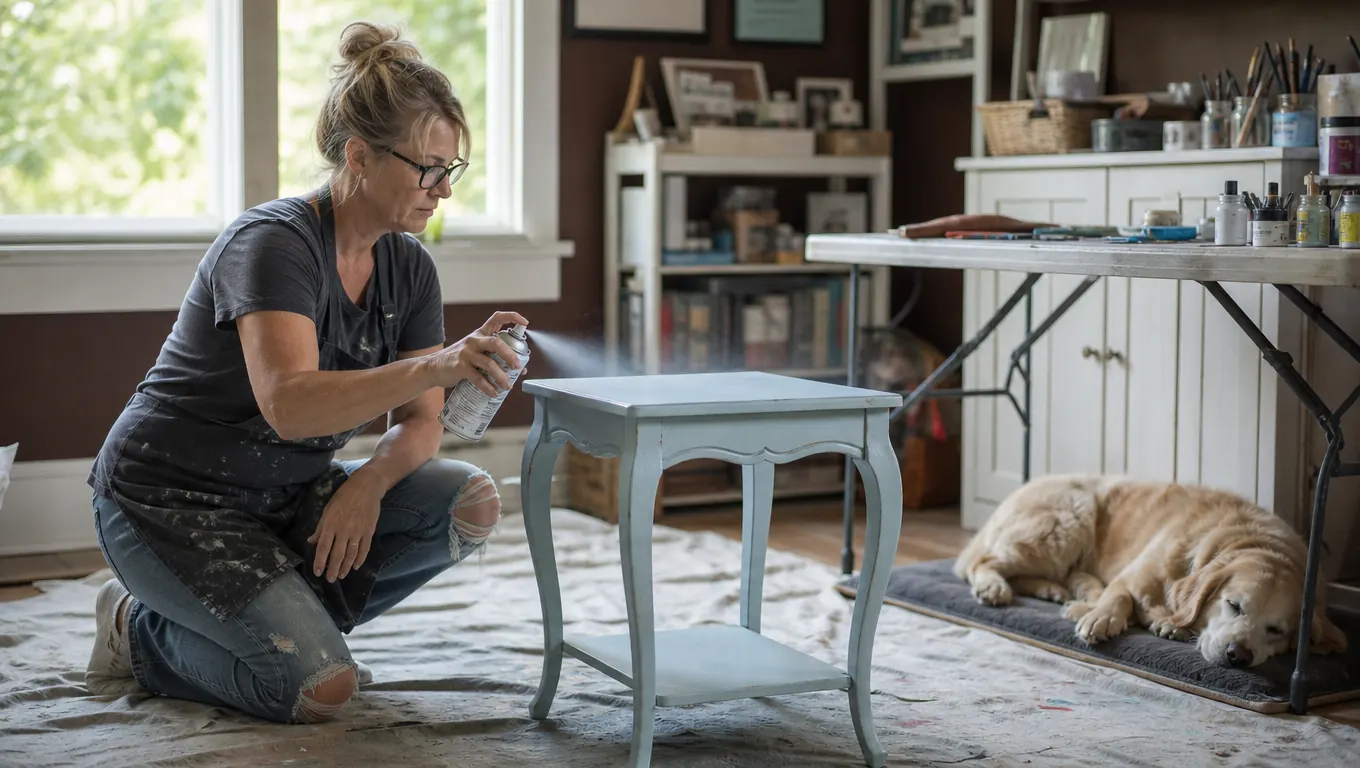
If you have a spare bedroom that has slowly turned into a craft room, you know exactly how a project starts. You find a good wooden stool at a garage sale, carry it inside, and then stand there wondering how you will ever get it painted without brush marks, drips, and a week of drying time. I have been there more times than I can count. So when I finally picked up a can of Rust-Oleum Chalked Spray Paint for a bookshelf I had been putting off, I did what I always do: I cleared off a corner of the garage, shook the can the way the label says to, and hoped.
Months later, after that bookshelf, a nightstand, four picture frames, and a small stool my husband Ron keeps threatening to steal, I have a real opinion. Rust-Oleum Chalked Spray Paint is not magic, and it is not for every project. But for the right piece, in the right conditions, it is the easiest smooth matte finish I have gotten from a can.
The Quick Verdict
A dependable spray paint for indoor wood pieces when you want a smooth matte finish without brush marks. Not for outdoor furniture, not for pieces that take heavy daily abuse, and not a replacement for priming everything.
Amazon Check Today's Price →The can I keep reaching for in the garage
After months of projects, Rust-Oleum Chalked Spray Paint is the one I grab first for indoor wood makeovers. It dries fast, covers well, and cleans up with soap and water.
Amazon Check Today's Price on Amazon →How I've Used It
My craft room is the converted spare bedroom at the back of our 1960s ranch house outside Indianapolis. It has a long folding table, a pegboard wall, and a window that faces the backyard. My dog Biscuit, a 7-year-old beagle mix who weighs about 28 pounds, sleeps under the craft table and has a talent for stealing ribbon off the floor. That is why I keep my supplies up high, and it is also why I do my spray painting in the attached garage instead of inside.
Over the past several months I have used Rust-Oleum Chalked Spray Paint on four kinds of projects: a pine bookshelf that had been sitting in the basement for two years, a secondhand nightstand with a drawer that stuck, a set of plain wooden frames from a craft store, and a small stool I bought at a garage sale. The bookshelf came first, on a Saturday in late September, and it is the project that made me trust this paint. It is 72 inches tall and 30 inches wide, with five shelves and a lot of flat surface, and I had been dreading it because every brush-on chalk paint I had tried before left visible strokes on large pieces. I sanded it lightly with 120-grit paper, wiped it down with a damp rag, and sprayed two thin coats. It dried to the touch in about 30 minutes, just like the label says, and by that evening it was back inside the craft room holding a few bins. Every piece since has gotten the same treatment: sand lightly, wipe clean, spray thin coats, and wait between them.
The nightstand was the project I almost ruined. It is a solid oak piece from the 1980s with one drawer that stuck, and the previous owner had painted it a dark glossy color that showed every fingerprint. I sanded it down to bare wood on a Thursday morning, and then I made the mistake of spraying the drawer front while it was still slightly damp from the wipe-down. The paint beaded up in little spots, and I had to let it dry, sand it again, and start over. The second attempt, with a completely dry surface, went on perfectly. That is the kind of lesson you only learn once, and it is the main reason I tell people to wipe with a dry cloth, not a damp one, before they spray.
The finish is where this paint earns its keep. It goes on with a smooth, velvety matte look that I have not been able to get with a brush, no matter how careful I am. On the bookshelf, the difference between the front edge and the side I painted first is basically invisible, which is more than I can say for most brush-on chalk paints I have tried.
What the Can Actually Delivers
Rust-Oleum Chalked Spray Paint is an acrylic paint in a spray can, made for interior wood projects. The can I use covers about 150 square feet, which is more than you would think once you start spraying. A nightstand took less than a quarter of the can. The bookshelf took about half. The frames took almost nothing. For a 30 fluid ounce can, that is a lot of project for the money.
The label says most surfaces need only one coat, and I found that to be true on light colors over light wood. The shade I have been using is Linen White, which is about as forgiving as a color can get on light wood. On the darker nightstand, I needed two coats to get the even matte look I wanted. The paint dries to the touch in 30 minutes, and cleanup is genuinely just soap and water. I have ruined more brushes than I care to admit with other paints, so that alone is worth something.
I learned the spraying rhythm on that nightstand, and it took me one bad pass to get it right. The first time I pressed the nozzle, I held the can too close and too still, and the paint landed in one heavy wet patch that stayed tacky for hours. When I stepped back, shook the can, and sprayed in slow, even passes about ten inches from the surface, the finish evened out completely. The full can weighs about 2.5 pounds, which makes sense once you realize you are holding 887 milliliters of paint, and the spray stayed consistent from the first project to the last, which is more than I can say for some cans I have used.
It is also low odor and low VOC, which matters to me because I spray in the garage with the door cracked and then carry the piece inside before it is fully cured. The day I painted the bookshelf, Ron walked through the garage to grab a rake and did not even mention the smell, which for him is high praise. I am not saying you should rush a piece inside, and I am not saying there is no smell at all. But compared to the spray paints I remember from years ago, this one does not clear out the house.
The finish is where this paint earns its keep: a smooth, velvety matte look I have not been able to get with a brush, no matter how careful I am.
How It Held Up Over Months
Here is the honest part. The bookshelf has been in my craft room for about five months now, holding bins of ribbon, jars of paint, and a stack of vinyl records I keep meaning to organize. It looks the same as the day I painted it. No chips, no yellowing, no marks where the bins slide on and off. The frames have been hanging in the hallway for three months and still look fresh.
Part of why I can date these projects so well is that I keep a little notebook in the craft room with the date of each piece and the paint I used. The bookshelf went in on the last Saturday of September. The frames went up on the first weekend of November. The nightstand came inside on a Tuesday in October, and the stool moved to the porch in December, right after Ron brought in a poinsettia. When I checked the bookshelf again in mid-January, during the annual craft room reorganization, every shelf edge still had its smooth matte finish.
The nightstand is a different story. It lives next to my side of the bed, where it holds a lamp, a glass of water, and my glasses. The top gets wiped down most days, and the drawer gets opened and closed constantly. After about four months, the top started to show faint wear in the corners, and the front edge of the drawer has a small chip where my wedding ring catches it. I noticed the chip one January morning when I was reaching for my glasses before the alarm went off. I touched it up with the same can, one quick pass, and you can barely see it unless you know where to look. That is the thing about a matte finish: it hides a touch-up better than a glossy one. But if you are painting something that will take daily contact, you should know that this is a matte interior paint, not a tough enamel.
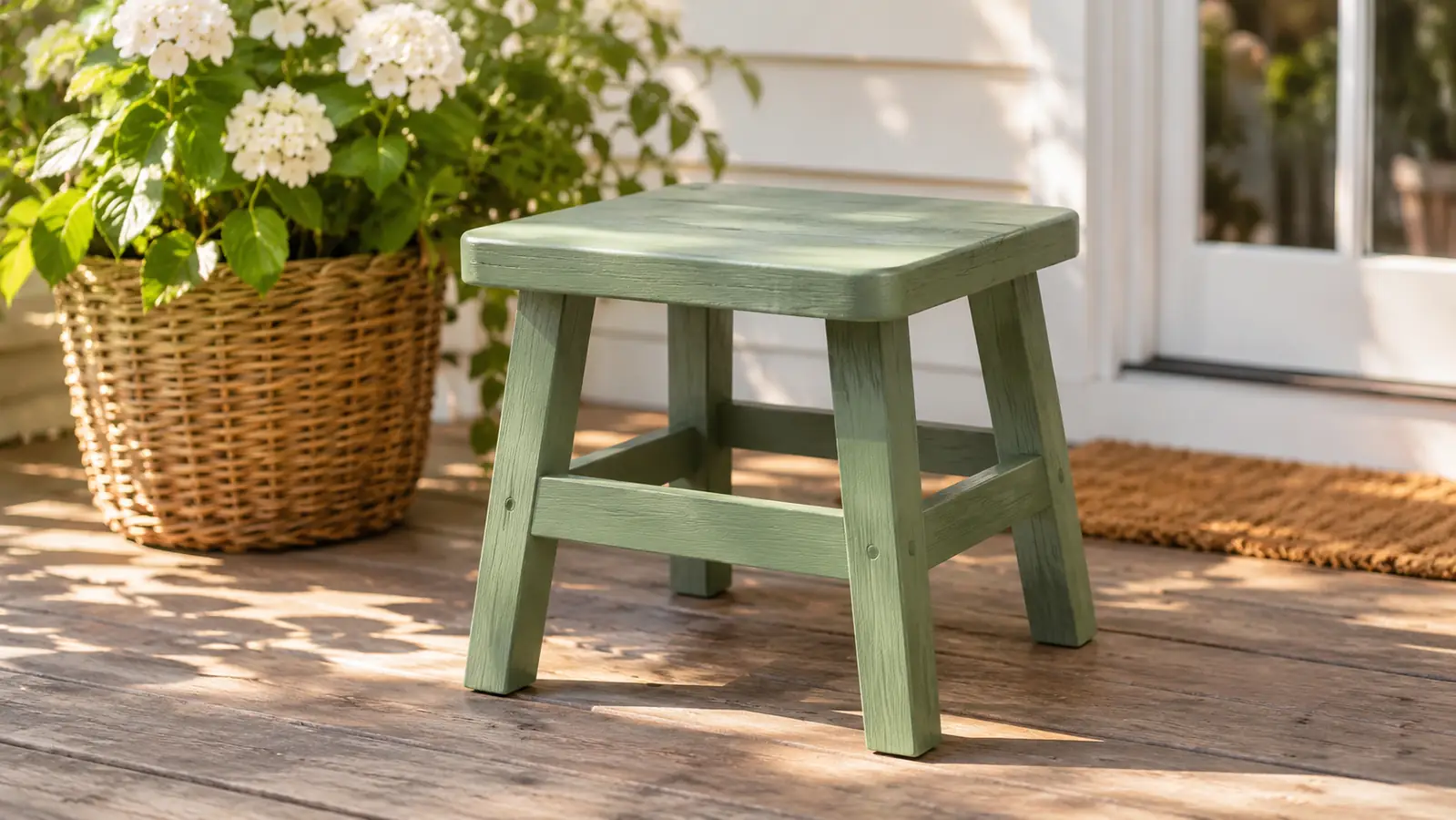
The stool has been the surprise. I painted it for the craft room, but Ron liked it so much he moved it to the back porch, where it has spent two months holding a potted plant. It has held up better than I expected for a piece that is technically indoors-only paint. I would still not use this on outdoor furniture you expect to last, because the label is clear that this is for interior use.
Where It Shines and Where It Fights You
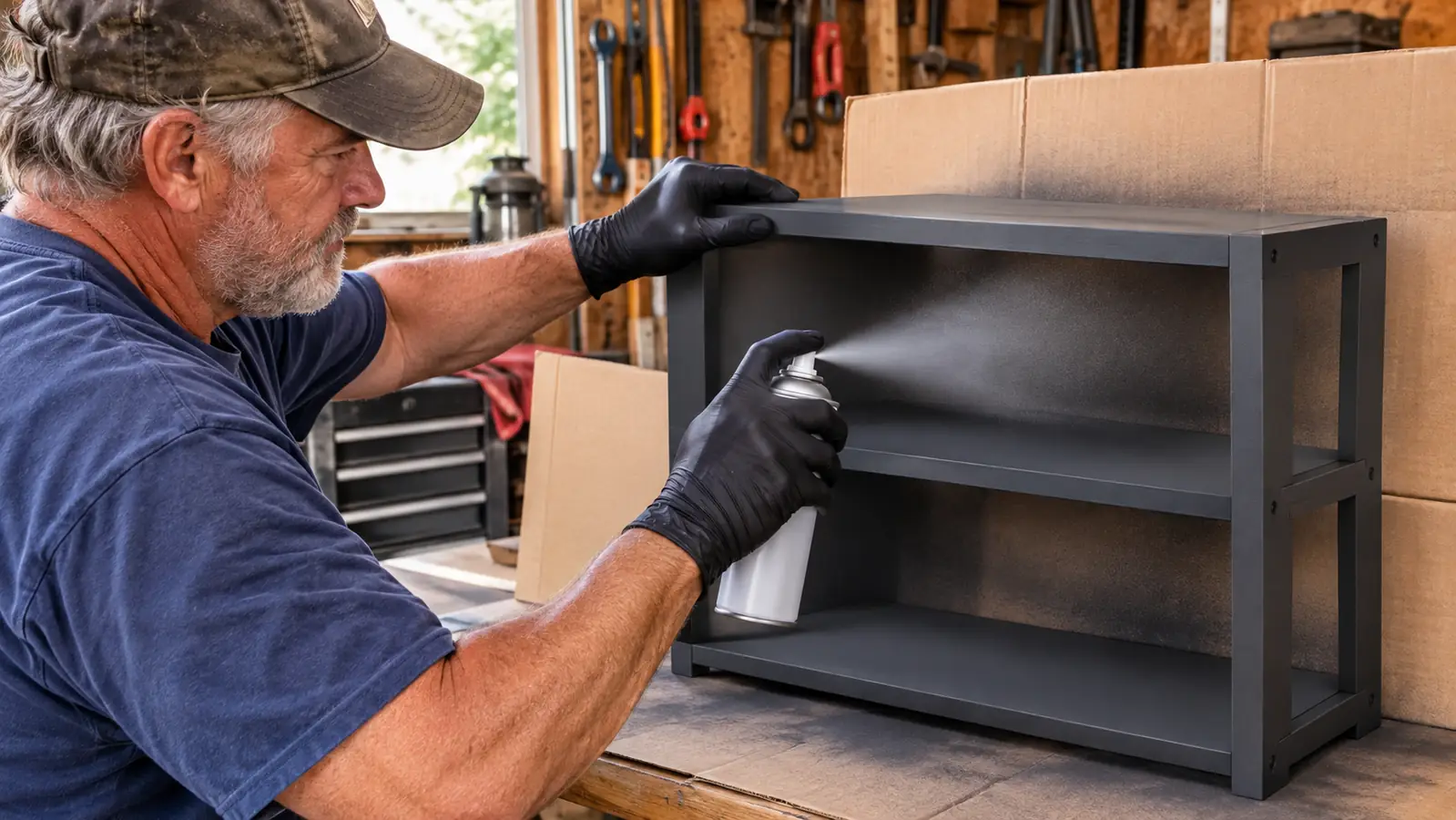
Rust-Oleum Chalked Spray Paint shines on flat or lightly detailed pieces: shelves, frames, stools, small tables, cabinet doors you can lay flat. The frames were the easiest project of the bunch. I laid them flat on a piece of cardboard in the garage, gave each one two quick passes, and they were done before I finished my coffee. Flat pieces are where this paint really earns its keep, because there is no corner or curve to fight. It also shines when you are willing to do the boring prep work. Sand lightly, wipe off the dust, and spray in thin even passes. When I did that, I got a finish that looked like it cost a lot more than a can of spray paint.
It fights you when you skip the prep or spray too thick. On the nightstand drawer, I got impatient on a Tuesday afternoon in October. The body of the nightstand had come out so well that I decided to rush the drawer instead of waiting the full 30 minutes between coats. I laid down a heavy second coat, and within an hour a drip had formed in the top left corner, and the thick spots were still tacky the next morning. I waited three days, sanded the corner down with 220-grit paper, wiped it clean, and resprayed it in two thin passes. You cannot tell it ever happened. But I lost a whole evening to my own impatience, and the only thing the paint did wrong was dry exactly as slowly as any thick coat of paint would.
It is also not the paint for high-traffic pieces. If you are painting a kitchen table, a child's toy box, or anything that will get knocked around, I would pick something more durable. I would not use it on the little step stool Ron keeps in the kitchen for reaching the top cabinet, because that thing gets moved, kicked, and stood on every single day. This is a chalked finish. It is supposed to look soft and matte, and soft matte finishes show wear.
What I Liked
- Smooth matte finish with no brush marks, even for a nervous spray painter
- Dries to the touch in about 30 minutes, so projects move fast
- Covers about 150 square feet, so one can does several projects
- Cleanup is just soap and water, no solvent needed
- Low odor and low VOC, which matters when you spray in a garage
- Most pieces need only one or two coats on prepared wood
Where It Falls Short
- The matte finish shows wear on pieces that get daily use
- Prep work still matters: sand lightly and wipe clean first
- Easy to get drips if you spray too thick, and I did exactly that once
- Label says interior use, so it is not for outdoor furniture
- You need to work in a ventilated space and wait for it to cure
Who This Is For
This is for the person who has a garage-sale stool, a thrifted nightstand, or a shelf that needs a second life, and who wants a smooth matte finish without learning to be a brush painter. It is for the person who will spend ten minutes sanding and wiping before they spray, and who will spray in thin coats and wait between them. It is for the person who wants a project done in an afternoon, not a week, and who does not mind that the finish is soft and pretty rather than tough and glossy.
If that sounds like you, Rust-Oleum Chalked Spray Paint is one of the most forgiving spray paints I have used. It is the can I keep reaching for when I bring home a piece of wood that needs a second chance.
Who Should Skip It
Skip it if you are painting something that will take hard daily use, like a kitchen table, a bench, or a piece of furniture for small children. Skip it if you need a paint that can live outdoors, because this one is made for interior projects. And skip it if you hate prep work, because no paint in a can will fix a greasy, dusty, unsanded surface.
Also skip it if you are looking for a glossy or satin finish. This is a chalked matte paint. It looks like chalk paint, it feels like chalk paint, and it wears like chalk paint. If you want shine, this is not the can for you.
Ready to give that old piece a second life?
After months of projects, Rust-Oleum Chalked Spray Paint is still the first can I grab for indoor wood makeovers. Check today's price and see if it fits your next project.
Amazon Check Today's Price on Amazon →