
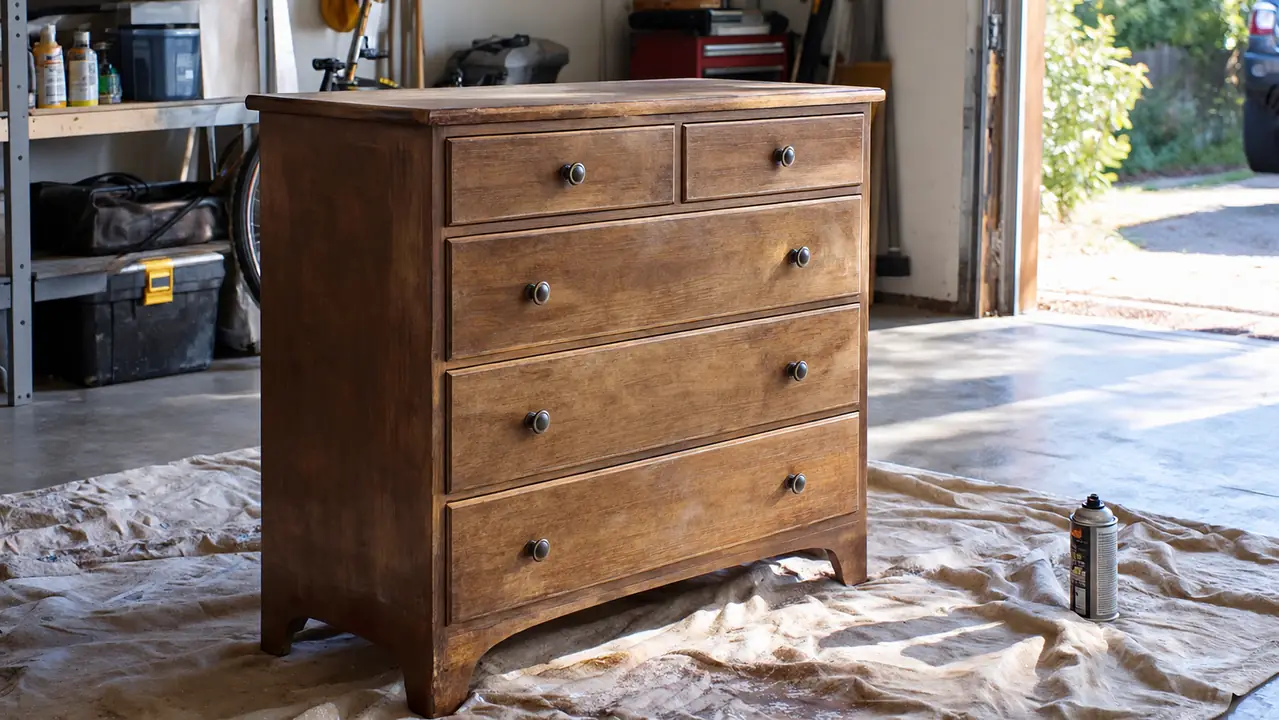
If you have a tired nightstand or a thrift-store dresser and you want it done before supper, Rust-Oleum Chalked Spray Paint is the can I reach for. If you want to sit with a brush and paint a piece slowly, on purpose, then brush-on chalk paint is the better companion. I have used both in my craft room and out in the garage, and they are not really rivals. They are different tools for different weekends.
Here is the short answer: choose the spray can when speed and a smooth, one-coat finish matter more than precision. Choose a brush-on chalk paint when you need control, want to paint indoors, or enjoy the slower part of the process. Both give you that soft matte chalky look. The difference is how you get there.
What You Are Really Comparing
When I say brush-on chalk paint, I mean the kind you stir, pour into a tray, and apply with a brush. It has been the standard for furniture makeovers for a long time. Rust-Oleum Chalked Spray Paint is the same idea in a can you shake and spray. Same chalky matte look, very different way of getting there.
Why I Ended Up With Both
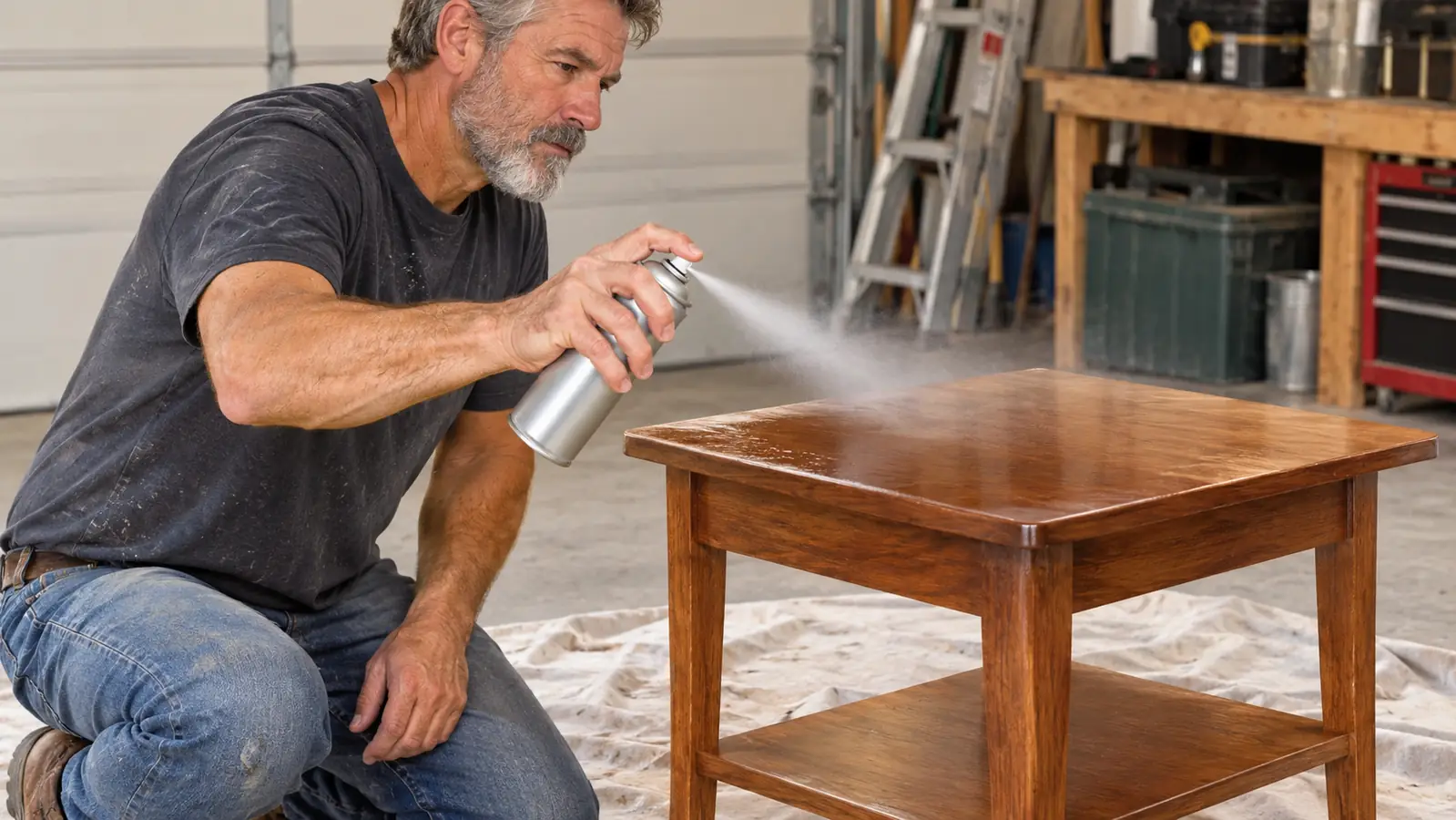
I came to this comparison the way most of us do: I bought a can of brush-on chalk paint for a dresser, painted it, loved the look, and hated how long it took. Then a friend told me to try the spray version. I was skeptical because spray paint in my head meant glossy cans and yard-sale furniture. Rust-Oleum Chalked Spray Paint is not that. It dries to the same soft matte finish, and it is low odor and low VOC, so I did not have to hold my breath.
Since then I have used the spray on a bookshelf, a nightstand, and a set of frames, and I have used brush-on paint on a chair and a little tray. The two have different personalities. The spray is the friend who helps you move fast. The brush is the friend who helps you slow down. This article is about knowing which friend to call.
How They Compare on Paper
Here is the honest comparison from my own projects. I did not test these in a lab. I tested them on a bookshelf, a chair, a nightstand, and a stack of frames in my garage and craft room.
| Rust-Oleum Chalked Spray Paint | Brush-On Chalk Paint | |
|---|---|---|
| Speed | One coat on most surfaces, dry to the touch in 30 minutes | Usually two coats, with brush drying time between them |
| Coverage | 150 square feet from a 30 oz can | Varies with how thick you brush it; a little goes a long way |
| Control | Fast, but the mist goes everywhere and masking is a must | A brush follows the grain and gets into corners without overspray |
| Where you can use it | Best for interior wood projects, with the garage or a window open | Gentle enough for the kitchen table, no spray mist |
| Cleanup | Soap and water for your hands, drop cloths for the rest | Soap and water too, and no mist on the floor |
| Finish | Smooth, velvety matte straight from the can | A soft brushed texture that many chalk paint fans like |
| Best for | Whole pieces, flat panels, quick makeovers | Trim, details, small projects, painting inside |
The spray can got a bookshelf done in one morning. The brush got a chair done in two evenings. Both looked like chalk paint. Only one of them fit my weekend.
Where Rust-Oleum Chalked Spray Paint Wins
The biggest win is time. I sprayed a small bookshelf on a Saturday morning and it was dry to the touch in 30 minutes. One coat covered the wood. I did not have to wait overnight between coats or worry about brush strokes showing up in the sunlight. Rust-Oleum Chalked Spray Paint covers 150 square feet from one 30-ounce can, which is more than enough for a nightstand, a side table, or a stack of picture frames.
The finish is also remarkably even. Because it comes out of the can as a fine mist, it lands flat and smooth. I am not a steady brush hand, so my hand-painted pieces always show a little texture. The spray hides that. It is low odor and low VOC, which matters when I am working in the garage with the door cracked and Biscuit is napping by the open bay.
If you are painting flat panels, doors, or the sides of a dresser, the spray is almost unfair. It covers a large area evenly in a few passes, and because it is a spray, you do not have to worry about the little ridges a brush leaves behind. I painted a set of four frame fronts in about ten minutes and they looked like they came from a shop.
Where Brush-On Chalk Paint Wins
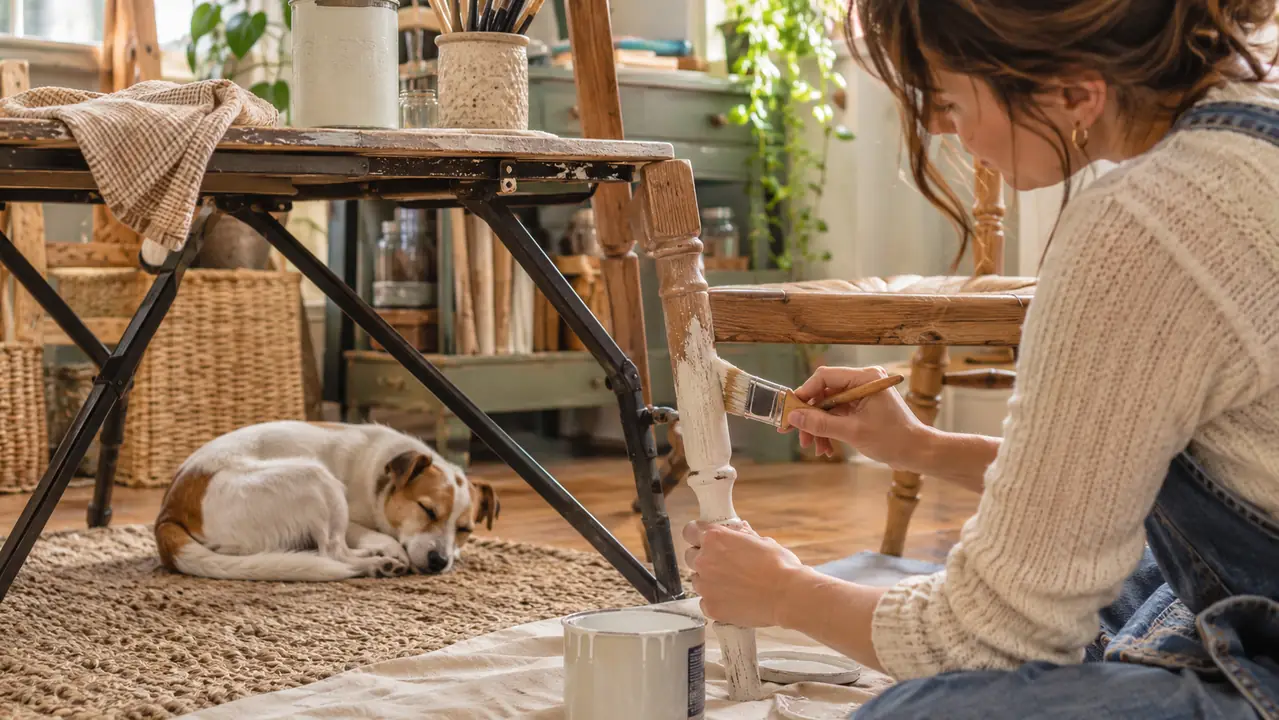
The brush wins on control, every time. When I painted a chair with turned legs, the spray wanted to coat everything, including the spots I wanted to leave alone. A brush let me follow the curves and keep the paint off the hardware. There is no overspray to mask off, no mist drifting onto the drop cloth or the dog, and no need to haul the piece out to the garage.
Brush-on chalk paint is also the friendlier choice indoors. It does not hang in the air the way spray does, and it cleans up with soap and water just like Rust-Oleum Chalked Spray Paint. For a small project like a frame or a tray, I would rather sit at the craft table with a brush and a cup of water than set up a spray station. It is slower, but it is also quieter and easier to stop and start.
The brush also forgives a shaky hand. I can paint a curved leg slowly, watch the paint settle, and fix a drip before it dries. With spray, a drip is harder to catch because your hand is farther from the surface. For anyone who likes the feel of a brush in their hand, that alone is worth the extra time.
If you want a weekend project, not a week-long one, this is the can to grab.
Rust-Oleum Chalked Spray Paint goes on in one coat, dries in 30 minutes, and cleans up with soap and water. Check today's price on Amazon and see if it fits your next project.
Amazon Check Today's Price on Amazon →Who Should Buy Which
Buy Rust-Oleum Chalked Spray Paint if you have a whole piece to refinish, a deadline, or a flat surface that needs an even coat. It shines on nightstands, bookshelves, cabinets, and dressers. Buy a brush-on chalk paint if you are working on trim, details, or anything with hardware you want to keep, or if you simply like the slower, hands-on part of painting.
I keep both in my craft room now. The spray can is for the big jobs that need to get done. The brush-on paint is for the evenings when I want to paint a little frame and listen to the radio. You do not have to pick one forever. You just need to pick the right one for the piece in front of you.
What About the Mess?
Let me be honest about the mess. Spray paint is faster, but it is messier. The mist is fine and it drifts. I always think I have enough drop cloth, and I always end up wiping a little overspray off the garage floor. The can says cleanup is easy with soap and water, and that is true for your hands and the can. The floor needs a rag and a little patience.
Brush-on paint is neater in the moment, but it has its own mess: brushes to rinse, a tray to wash, and a rim of dried paint on the can. I do not think one is cleaner overall. I think the spray pushes the mess into one corner of the garage, while the brush spreads it across the craft table. Pick your corner.
A Few Things I Learned the Hard Way
First, read the can before you start. Rust-Oleum Chalked Spray Paint is made for interior wood projects, and it covers 150 square feet, so one can is usually plenty for a single piece. I learned to set up drop cloths wider than I thought I needed. Spray paint has a way of finding the edges of the cloth, the floor, and sometimes Biscuit's tail if he is not napping far enough away.
Second, let the first coat tell you what to do. The can says most surfaces need only one coat and it dries to the touch in 30 minutes. On raw wood, one coat really was enough. On an old painted dresser, I needed a second pass on a couple of spots. That is not a flaw in the paint. It is just what old furniture does.
Third, keep the brush-on paint around anyway. The spray is fast, but the brush is the one I use when I want to paint a detail or work indoors after supper. They are not competing in my craft room. They are both in the cabinet, and I grab whichever one matches the job.
One More Difference Worth Knowing
The spray can is the better choice when you want the same finish across a whole piece. Because the mist lands evenly, a dresser painted with Rust-Oleum Chalked Spray Paint looks uniform from top to bottom. With a brush, I sometimes get a slightly heavier coat in one spot and a lighter one in another, especially on a big flat side. That is not a problem. It is just the nature of a hand-held brush.
The brush is the better choice when the piece has a story. A chair with old paint layers, a tray with a printed design, a frame with carved corners. Those want a slower hand and a closer look. I would not spray a carved frame. I would brush it and enjoy the process. That is the real difference: the spray is for the result, and the brush is for the process.
Neither finish is better in the way that matters. Both dry to a soft matte chalky look that fits a farmhouse shelf or a cottage nightstand. The choice really comes down to how much time you have and how much control you want. I have made that choice both ways, and I have been happy both times.
How the Spray Performed on My Bookshelf
The bookshelf was my first spray project, and it was the one that sold me. I wiped it down, set it on a drop cloth in the garage, and gave it a light, even pass with Rust-Oleum Chalked Spray Paint. Thirty minutes later it was dry to the touch. I came back after lunch, looked at it from every angle, and could not find a single brush mark. There were no brush marks because there was no brush.
The chair was my first brush project after that, and it reminded me why I keep both. I painted the turned legs slowly, wiped a drip off the seat, and let the second coat sit overnight. It came out just as pretty as the bookshelf. It just took longer and asked more of me. That is not a complaint. It is the reason I own both.
The Bottom Line
If you are still standing in the aisle trying to decide, ask yourself one question: do I want this piece done today, or do I want to spend a few evenings with it? Rust-Oleum Chalked Spray Paint is the today answer. Brush-on chalk paint is the evenings answer. Both will give you a piece you are proud to bring inside.
Ready to spray your next makeover?
Rust-Oleum Chalked Spray Paint is the fastest way I have found to get a chalky matte finish on wood. See today's price on Amazon and keep a can in the garage for the next thrift-store find.
Amazon Check Today's Price on Amazon →